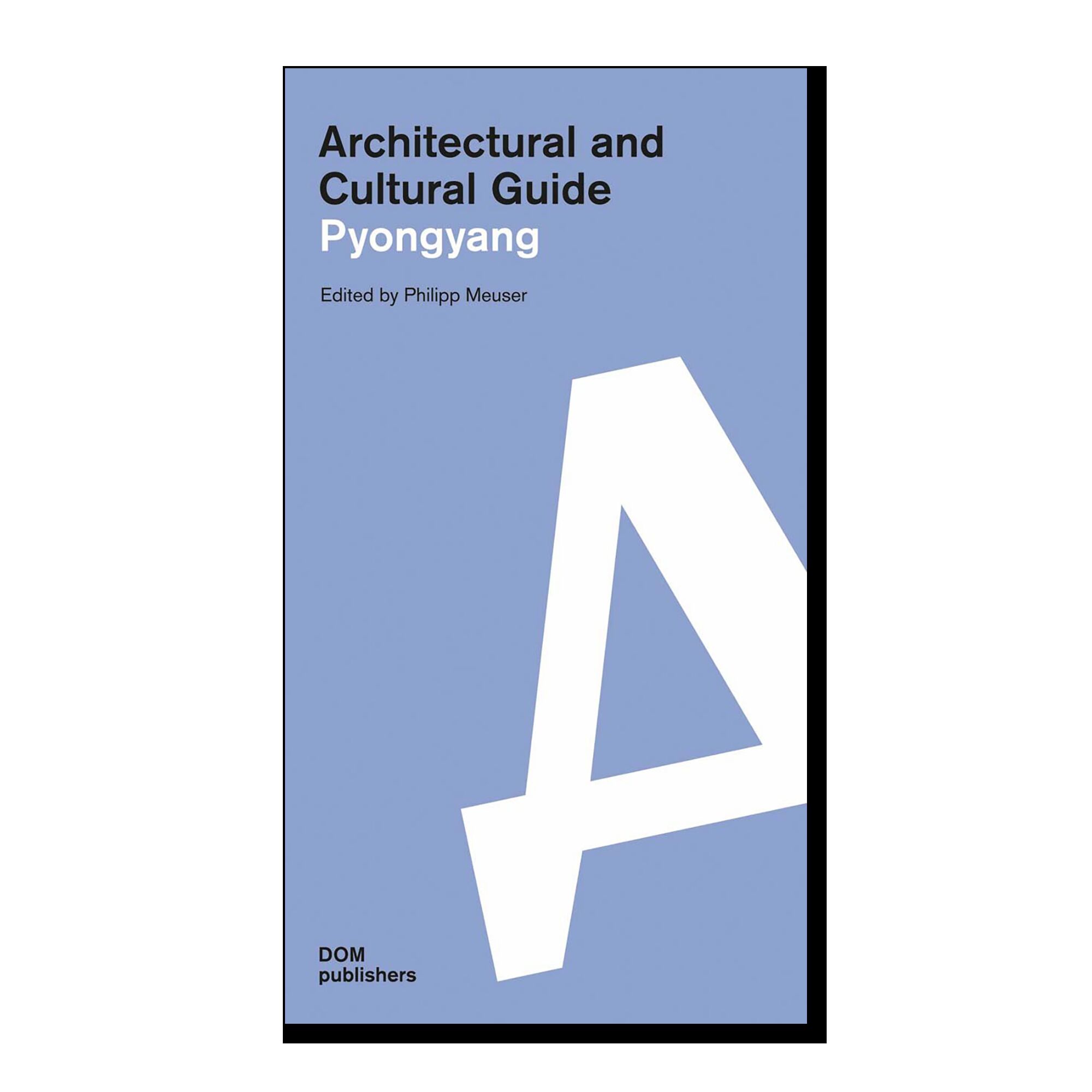
Architectural guide Pyong Yang / Пхеньян. Архитектурный путеводитель (Английский)
- Год: 2024
- Язык: английский
- Издательство: DOM Publishers
- ISBN: 9783869221878
- Страниц: 368
- Обложка: мягкая
- О книге
The first volume is a photographic gallery of Pyongyang buildings divided into major architectural categories--urban planning, residential buildings, cultural venues, education and sport, hotels/department stores, transport infrastructure, and monuments. Buildings' exteriors are shown, with occasional photos of parts of interiors. Overall, the treatment is the gross architectural forms and styles--as limited as these are as constrained by the North Korean Communist ideology--not details of interior design, materials, individual artists, or features notable for artistic or other reasons. What is notable overall despite the broad-ranging perspective with the large number of buildings shown is the repetitiveness of architectural concept. Though categorized into major categories in terms of the buildings' kind or function, the North Korean architecture is basically either functional (e. g., apartment buildings, government buildings) or monumental (e. g., statues, commemorative or symbolic structures).
The concept "juche" discussed briefly in the second volume accounts for the architecture. The term meaning simply "self-reliant" has broader, significant historical and political connotations. In a 1991 work on architecture parts of which are excerpted, the North Korean leader Kim Jong-il (d. 2011) wrote, "Juche architecture regards the masses' aspirations and demands as the sole criterion for the evaluation of beauty." Although this is standard Communist ideology, for North Korean leaders since the end of World War II, "juche" was a principle intended to develop a distinctive national identity apart from Soviet Russia which had been Korea's ally in the War against Japan occupying the Korean peninsula.